
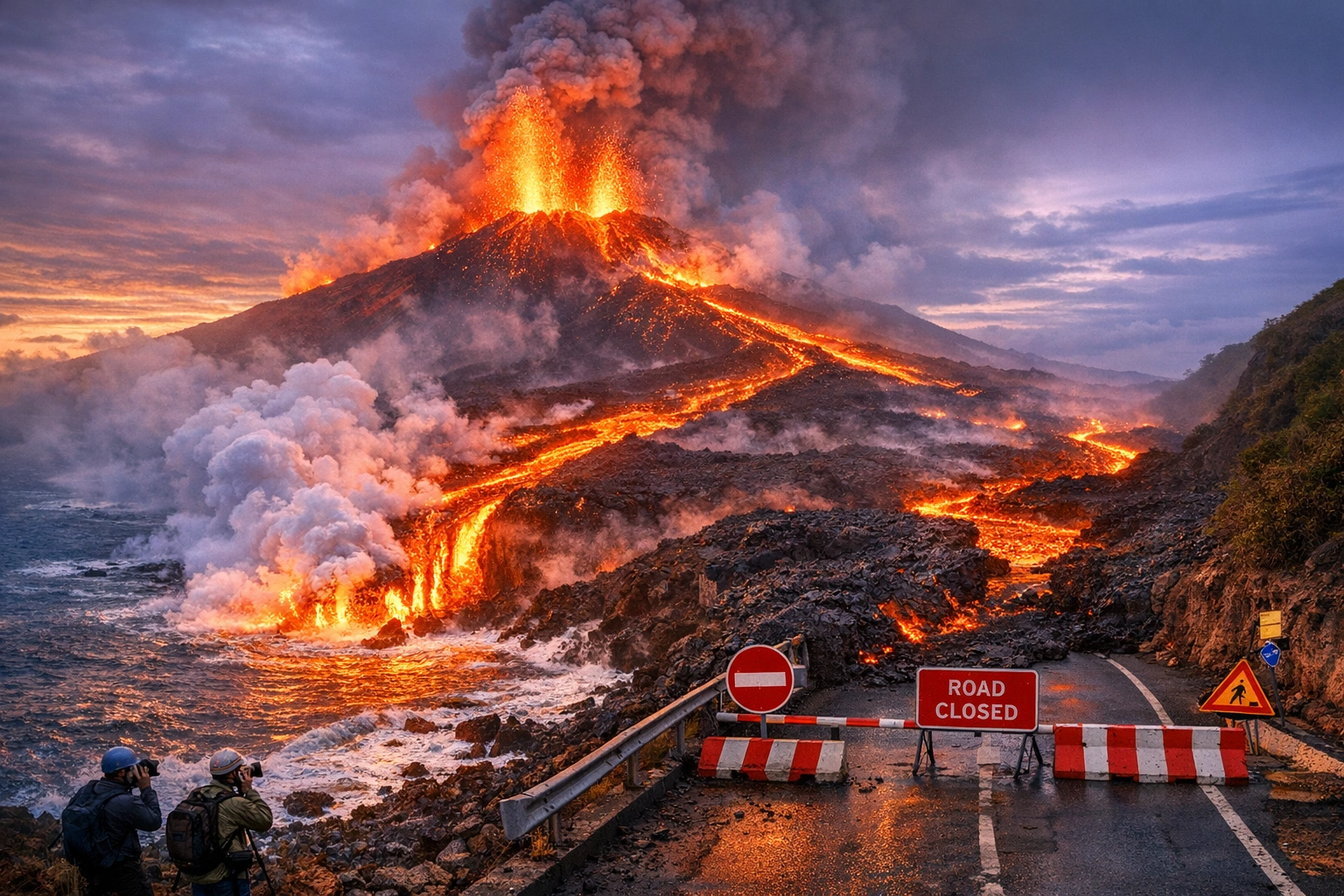
In February 2026, one of the world’s most active volcanoes, Piton de la Fournaise, erupted once again, creating a breathtaking yet powerful natural spectacle. Located on Réunion Island, the volcano is known for its frequent eruptions, but this event stood out due to the extent and reach of its lava flows.
The eruption drew global attention as molten lava traveled several kilometers and eventually met the waters of the Indian Ocean. While largely contained within the volcano’s usual activity zone, the scale and visual impact of the eruption made it a remarkable geological event.
Understanding Piton de la Fournaise: A Highly Active Volcano
Piton de la Fournaise is classified as a shield volcano, characterized by gentle slopes and frequent, relatively predictable eruptions. It is among the most active volcanoes globally, with eruptions occurring regularly over the years.
Its activity is closely monitored by scientists due to its accessibility and the valuable insights it provides into volcanic behavior. Unlike more explosive volcanoes, its eruptions are typically effusive, meaning lava flows steadily rather than erupting violently.
This makes it a unique site for studying volcanic processes while also posing manageable risks compared to more explosive systems.
Explanation:
This section explains what Piton de la Fournaise is and why it is significant. It highlights its classification, behavior, and importance for scientific research.
The February 2026 Eruption: A Renewed Burst of Activity
The eruption began in mid-February 2026, with lava fountains and flows emerging from vents on the volcano’s southeastern flank. These vents released molten rock that steadily moved downhill, following the natural contours of the landscape.
While eruptions are common at this volcano, the duration and reach of this event made it particularly notable. Scientists observed that the lava flow extended approximately 7 kilometers, which is significant even for an active volcano like this.
The steady movement of lava created a dramatic visual display, attracting attention from both researchers and the public.
Explanation:
This section describes the eruption itself. It focuses on when it started, how it unfolded, and why it was considered unusual.
Lava Flow Reaches the Indian Ocean
One of the most striking aspects of the eruption was the moment when the lava reached the Indian Ocean. As the molten rock entered the water, it created a surreal scene of steam clouds and hissing interactions between fire and water.
This phenomenon occurs when extremely hot lava meets relatively cooler seawater, leading to rapid cooling and the formation of new land structures. The process is both visually stunning and scientifically significant.
Such events are relatively rare and provide valuable opportunities to study how volcanic activity shapes coastlines.
Explanation:
This section explains the interaction between lava and the ocean. It highlights the visual and scientific importance of this phenomenon.
Impact on Infrastructure: RN2 Road Cut Off
As the lava advanced, it crossed the RN2 coastal road on March 13, marking the first time in nearly two decades that this critical route was affected. The road serves as an important transportation link on the island.
The crossing disrupted connectivity, forcing authorities to take precautionary measures and redirect traffic. While no major casualties were reported, the incident underscored the potential impact of volcanic activity on infrastructure.
Such events highlight the need for preparedness and effective disaster management in regions with active volcanoes.
Explanation:
This section focuses on the impact of the eruption on infrastructure. It explains how the lava flow affected transportation and why it was significant.
Scientific Observations and Insights
Scientists closely monitored the eruption, noting that it remained largely within the volcano’s typical activity zone. This containment reduced the risk to populated areas while still providing valuable data.
The length of the lava flow—around 7 kilometers—offered insights into the dynamics of magma movement and eruption patterns. Researchers used this opportunity to study the behavior of lava flows over extended distances.
Such observations contribute to a better understanding of volcanic systems and improve future prediction models.
Explanation:
This section discusses the scientific importance of the eruption. It explains what researchers learned and why it matters.
Why This Eruption Was Unique
While Piton de la Fournaise erupts frequently, not all eruptions are the same. This particular event stood out due to the length of the lava flow and its interaction with both land and sea.
The crossing of a major road and the eventual meeting with the ocean added layers of significance to the event. These factors combined to make it one of the more memorable eruptions in recent years.
The uniqueness lies not just in the visuals but also in the data it provided to scientists.
Explanation:
This section explains what made the eruption special. It highlights the factors that set it apart from typical volcanic activity.
Balancing Natural Beauty and Risk
Volcanic eruptions often present a paradox—they are both beautiful and potentially dangerous. The flowing lava and glowing landscapes create stunning दृश्य, attracting photographers and researchers alike.
However, these events also pose risks to infrastructure, ecosystems, and human safety. Managing this balance requires careful monitoring and public awareness.
Authorities and scientists work together to ensure that people can appreciate the natural phenomenon while staying safe.
Explanation:
This section discusses the dual nature of volcanic eruptions. It explains how they can be both and hazardous.
The Role of Monitoring and Preparedness
Réunion Island has well-established monitoring systems in place to track volcanic activity. These systems provide early warnings and help authorities respond effectively to eruptions.
Preparedness measures, such as evacuation plans and road closures, are crucial in minimizing risks. The successful management of this eruption demonstrates the importance of such systems.
Continuous monitoring ensures that future eruptions can be handled with similar efficiency.
Explanation:
This section highlights the importance of monitoring and preparedness. It explains how these measures help manage volcanic risks.
Conclusion: A Reminder of Earth’s Dynamic Power
The 2026 eruption of Piton de la Fournaise serves as a powerful reminder of the dynamic forces shaping our planet. From the steady flow of lava to its dramatic encounter with the Indian Ocean, the event showcased the raw energy of nature.
While the eruption remained largely contained, its impact on infrastructure and its scientific significance cannot be overlooked. It provided valuable insights into volcanic behavior and highlighted the importance of preparedness.
reclamatomplo.com reclamatomplo.com reclamatomplo.com reclamatomplo.com reclamatomplo.com reclamatomplo.com reclamatomplo.com reclamatomplo.com reclamatomplo.com reclamatomplo.com reclamatomplo.com reclamatomplo.com reclamatomplo.com reclamatomplo.com reclamatomplo.com reclamatomplo.com reclamatomplo.com reclamatomplo.com reclamatomplo.com reclamatomplo.com reclamatomplo.com reclamatomplo.com reclamatomplo.com reclamatomplo.com reclamatomplo.com reclamatomplo.com reclamatomplo.com reclamatomplo.com reclamatomplo.com reclamatomplo.com reclamatomplo.com reclamatomplo.com reclamatomplo.com reclamatomplo.com reclamatomplo.com reclamatomplo.com reclamatomplo.com reclamatomplo.com reclamatomplo.com reclamatomplo.com reclamatomplo.com reclamatomplo.com reclamatomplo.com reclamatomplo.com reclamatomplo.com reclamatomplo.com reclamatomplo.com reclamatomplo.com reclamatomplo.com reclamatomplo.com reclamatomplo.com reclamatomplo.com reclamatomplo.com reclamatomplo.com reclamatomplo.com reclamatomplo.com reclamatomplo.com reclamatomplo.com reclamatomplo.com reclamatomplo.com reclamatomplo.com reclamatomplo.com reclamatomplo.com reclamatomplo.com reclamatomplo.com reclamatomplo.com reclamatomplo.com reclamatomplo.com reclamatomplo.com reclamatomplo.com reclamatomplo.com reclamatomplo.com reclamatomplo.com reclamatomplo.com reclamatomplo.com reclamatomplo.com reclamatomplo.com reclamatomplo.com reclamatomplo.com reclamatomplo.com reclamatomplo.com reclamatomplo.com reclamatomplo.com reclamatomplo.com reclamatomplo.com reclamatomplo.com reclamatomplo.com reclamatomplo.com reclamatomplo.com reclamatomplo.com reclamatomplo.com reclamatomplo.com reclamatomplo.com reclamatomplo.com reclamatomplo.com reclamatomplo.com reclamatomplo.com reclamatomplo.com reclamatomplo.com reclamatomplo.com reclamatomplo.com reclamatomplo.com reclamatomplo.com reclamatomplo.com reclamatomplo.com reclamatomplo.com reclamatomplo.com reclamatomplo.com reclamatomplo.com reclamatomplo.com reclamatomplo.com reclamatomplo.com reclamatomplo.com reclamatomplo.com reclamatomplo.com reclamatomplo.com reclamatomplo.com reclamatomplo.com reclamatomplo.com reclamatomplo.com reclamatomplo.com reclamatomplo.com reclamatomplo.com reclamatomplo.com reclamatomplo.com reclamatomplo.com reclamatomplo.com reclamatomplo.com reclamatomplo.com reclamatomplo.com reclamatomplo.com reclamatomplo.com reclamatomplo.com reclamatomplo.com reclamatomplo.com reclamatomplo.com reclamatomplo.com reclamatomplo.com reclamatomplo.com reclamatomplo.com reclamatomplo.com reclamatomplo.com reclamatomplo.com reclamatomplo.com reclamatomplo.com reclamatomplo.com reclamatomplo.com reclamatomplo.com reclamatomplo.com reclamatomplo.com reclamatomplo.com reclamatomplo.com reclamatomplo.com reclamatomplo.com reclamatomplo.com reclamatomplo.com reclamatomplo.com reclamatomplo.com reclamatomplo.com reclamatomplo.com reclamatomplo.com reclamatomplo.com reclamatomplo.com reclamatomplo.com reclamatomplo.com reclamatomplo.com reclamatomplo.com